
Until recently, the choice between spot freight and long-term contract transportation seemed fairly obvious for the large and medium-sized businesses. A company, which regularly transported large volumes of cargo, would hold a tender, select trusted carriers and sign long-term contracts with them—often lasting for a year or several years.
The logic was simple: the shipper secured guaranteed transport capacity and predictable terms, while the carrier secured guaranteed volume of work in advance.
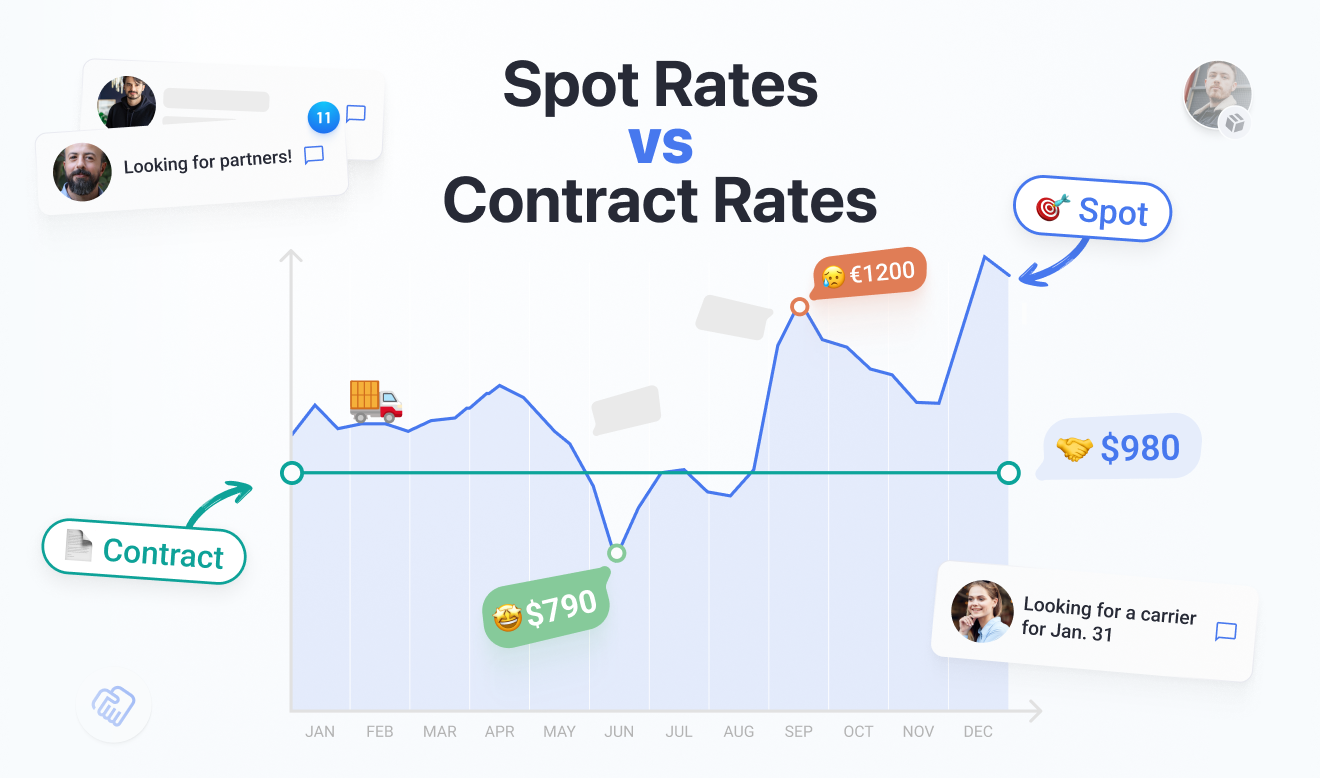
That model worked well for both sides. The shipper could plan the budget for logistics; the carrier could plan fleet utilization and resources. But freight markets now move faster than they used to. Fuel, capacity, demand on individual routes and other factors can shift within days — and the rate that was competitive the day a contract was signed on can quietly stop reflecting the reality. That is why the question of spot rates vs contract rates is no longer a choice of one or the other, but a question of how to use both.
This guide breaks the topic down into practical pieces:
- What spot freight and spot rates actually are
- What a freight contract is and where contract logistics still wins
- What procurement in logistics means and how it is changing
- Why large shippers now use spot market as a benchmark, not just a fallback
- How private spot bidding combines both models in one system
What Are Spot Rates in Shipping?
Spot freight refers to a shipment arranged at a spot rate for a single, short-term transaction without a long-term contract. The shipper indicates a specific load — with route, cargo parameters, timing and requirements — then carriers respond with their terms, and the shipper later compares the offers and selects one.
Spot rates in shipping are the prices formed at that exact moment, based on live supply and demand. Unlike the contract price agreed months earlier, the spot rate reflects today’s market: how much free capacity exists on the route, how urgent the demand is and what carriers are willing to accept right now.
That is the core answer to what spot market freight is — an open market where price is set at the point of need, not in advance. Here is how spot rates affect freight markets: they act as a live signal. When capacity tightens, spot rates rise before contract rates can be renegotiated; when capacity loosens, spot rates fall first. For a shipper, that signal is valuable even when they are not actively buying on the spot market — because it shows what transportation is really worth today.
A common misconception is that the spot market is automatically cheaper. It is not. Its value lies elsewhere: spot shows the real market offer at a specific moment, which is exactly what a fixed contract cannot do.
What a Freight Contract Is and Where Contract Logistics Still Wins
A freight contract — sometimes called a transportation contract — is a longer-term agreement between a shipper and a carrier or forwarder covering agreed cargo volumes, routes, service levels and the price over a defined period. This is the foundation of contract logistics: repeatable routes, planned freight volumes and stable relationships.
The problem with a long-term contract is not the contract itself. For regular transportation, it remains an essential tool. Long-term relationships let a company work with proven partners, secure capacity in advance and reduce operational risks.
But the faster the market moves, the harder it is to fix an optimal price for a long period. Imagine a shipper that has worked with the same carrier for years. The partner is reliable, freight volumes are stable, so both sides sign a long-term deal. A few months later the market shifts: one route has surplus trucks, another has a shortage, and the cost of resources changes. The contract terms, however, stay the same.
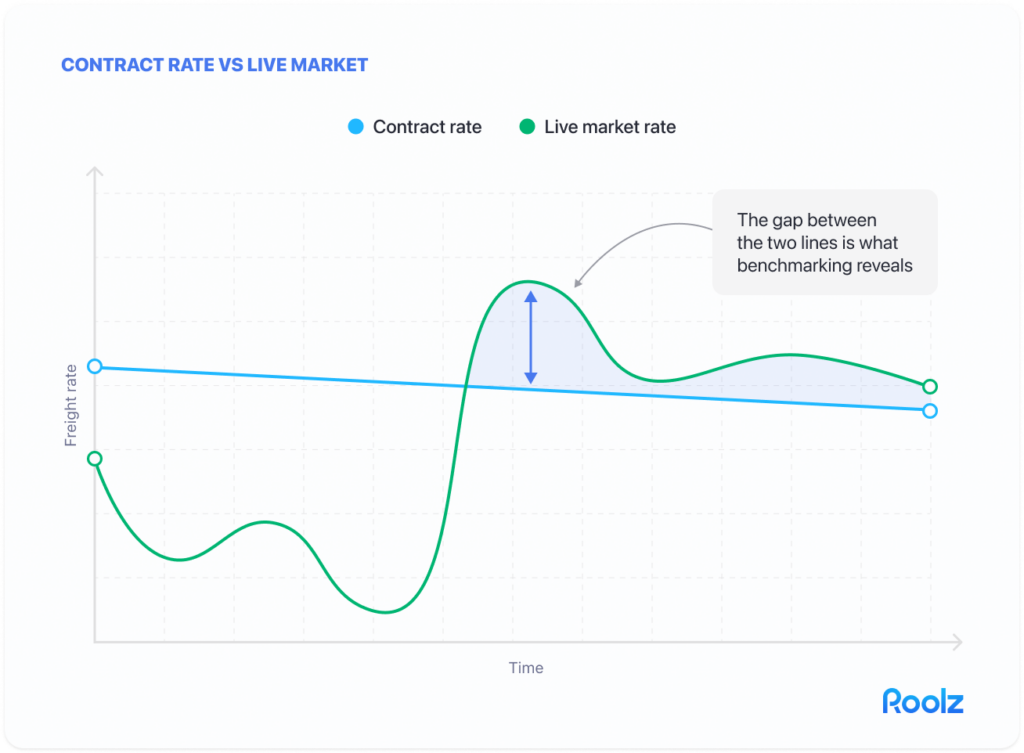
The shipper still gets predictability — but no longer knows for sure whether the agreed rate matches what the market offers today. Comparing contract rates with current spot rates is the only way to find out. That gap is where a new question appears for procurement teams.
What Procurement in Logistics Is and Why It’s Changing
Freight procurement (also called transportation procurement) is an end-to-end process of sourcing, comparing and distributing transportation to carriers — and then managing those relationships over time. Broadly speaking, this is what procurement in logistics means: not just booking a truck, but continuously deciding who transports your freight, at what price and on what terms.
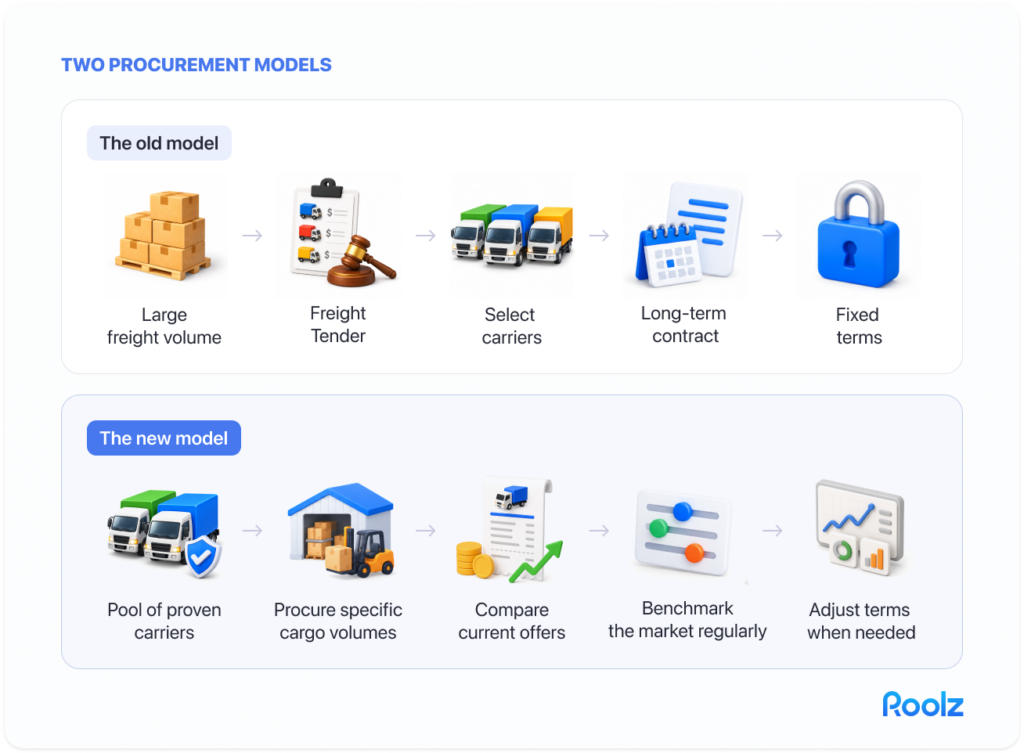
For a long time, procurement in logistics followed one sequence:
large freight volume → tender → select carriers → long-term contract → fixed terms.
Today a more flexible pattern is emerging:
pool of proven carriers → procure specific cargo volumes → compare current offers → benchmark the market regularly → adjust terms when needed.
This does not mean abandoning contracts. Contracts can remain the backbone for regular routes and predictable freight volumes. But part of procurement can be run more flexibly — by splitting cargo volumes, shortening the price-lock period or running regular bidding among the company’s own carrier pool.
Roolz builds this idea directly into its freight procurement tools: shippers can run bidding, auctions or fixed-price rounds and compare offers side by side instead of reconciling rates by hand in a spreadsheet.
Contract VS Spot Freight Benchmarking: Why Large Shippers Turn to the Spot Market
The spot market lets a shipper see the price of transportation at the exact moment the need arises. Thus, apart from solving for one-off loads, spot also becomes a way to check the current market price.
This is contract vs spot freight benchmarking: a company compares offers for specific shipments against its existing contract terms and understands how competitive its procurement rates still are. This matters most in a volatile market, where prices can change much faster than a long-term agreement is renegotiated. Run it regularly — for example, once a quarter on your main routes — and the contract rate stops being a number you accepted a year ago and becomes the one you can verify.
Traditionally, shippers reach for spot market when they need to:
- find transport urgently;
- cover a freight the primary carrier could not take;
- handle extra volume of cargo;
- run a new or one-time route;
- adapt to a seasonal peak;
- add capacity;
- find a cargo for empty transport and reduce empty runs.
But the spot market can also play a more strategic role — as a benchmark that keeps contract pricing fair.
Spot Market Isn’t Only for Urgent Jobs: The Rise of Private Spot Market
Using the spot market does not mean searching for an unknown carrier on the open market every time. For large businesses, price is not the only factor — carrier reliability, route experience, service quality, available equipment and adherence to shipping terms all matter.
That is why a private spot market has emerged: an offer isn’t provided to the entire market, but to a pre-selected pool of carriers. The shipper gets several advantages at once:
- works with already-proven partners;
- keeps control over who participates;
- receives competitive bids on a specific offer;
- can compare current rates against market’s benchmark;
- retains a history of collaboration with each carrier;
- can expand the pool with new companies when needed.
In effect, a company’s own carrier pool turns into a managed, competitive market. On Roolz, this happens through the private freight exchange, where shippers can run closed bidding among trusted partners and, when necessary, duplicate the offer to the public (spot) exchange to get an extra price reference.
This forms a hybrid procurement model: regular partners provide reliability and predictability, while spot market bidding adds flexibility, competition and a regular check against the market.
What Changes for Carriers
For carriers, long-term contracts keep their value too. Guaranteed freight volume lets carriers plan their fleet, drivers and other resources — and in exchange for that predictability a carrier may offer better terms.
Spot market serves a different purpose: it lets carriers find extra loads quickly, use free capacity and react to shifts in demand. So the two markets solve two different problems:
- contract — stability and predictable utilization;
- spot — flexibility and the ability to find work quickly.
Carriers can publish available transport and let the system match it with suitable cargo — including offers from the open spot market — through Roolz freight search for carriers.
How One Digital Freight Marketplace Combines Contract and Spot
In the traditional setup, procurement processes live apart: the carrier pool is in the spreadsheets, offers are sent by email and messengers, rates are collected manually and tender results are processed separately. A single digital platform brings these processes together — and lets the same carrier take part in both long-term contracts and individual spot market rounds. Roolz works as a digital freight marketplace for spot freight and a procurement tool for regular routes in one workspace.
Roolz implements exactly this hybrid approach.
Private pool + open market
A shipper builds a pool of proven carriers and forwarders and runs bidding among them only. When needed, the offer can also be duplicated on the open exchange — turning the open spot market into a price reference:
- private exchange — work with trusted partners;
- public exchange — access to a wider market and additional benchmarking.
A dedicated “Partner selection” mode lets a shipper publish a freight to the private and public exchange at once, then use the responses to grow its own carrier pool.
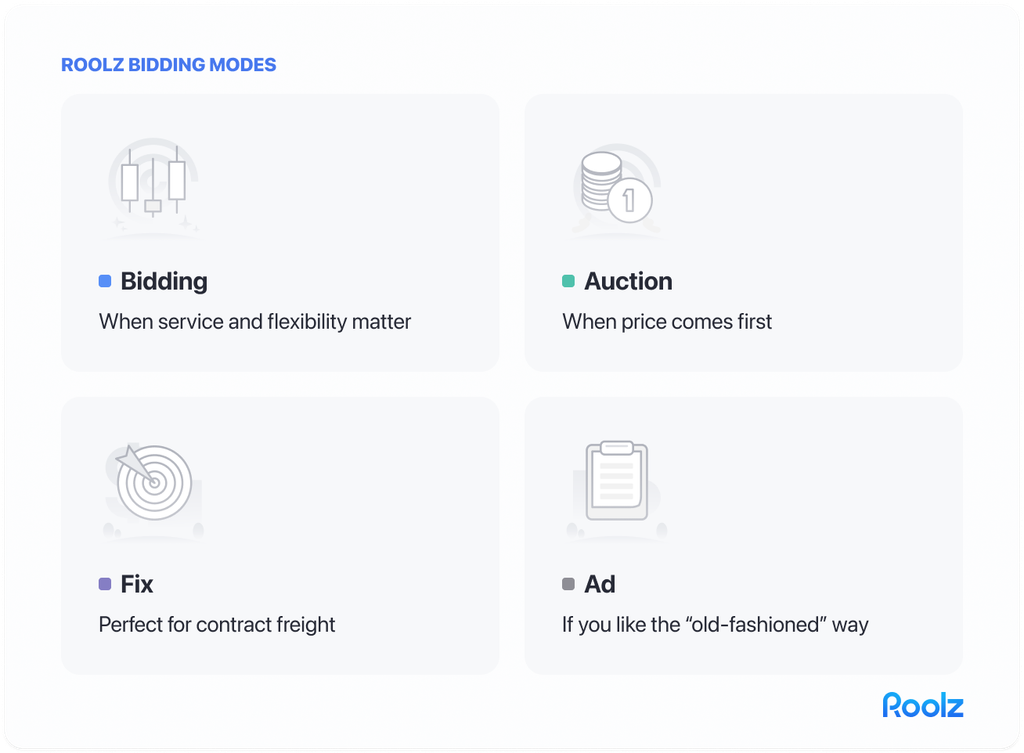
Four bidding modes for different tasks
Roolz lets you pick the mechanics to fit the task rather than forcing every purchase into one scenario:
- Bargain — when transport terms matter as much as price;
- Auction — when lowest price is the key criterion and the winner is determined automatically;
- Fix — when the shipper sets the price and looks for a carrier willing to work on those terms;
- Ad — when you simply publish an offer and wait for responses without a bidding mechanic.
How to run mini-bids for spot freight
A mini-bid is a short bidding round for one load or a small batch of loads. To run mini-bids for spot freight, publish the offer with route, cargo and timing, choose a mode (bargain when the terms matter, auction when the price decides), invite your private pool, set a short deadline and compare the offers side by side. Repeating this on your main routes gives you a steady stream of current spot rates to measure contract rates against.
Bidding mechanics that produce independent offers
For large purchases, apart from running an auction, it is also important how participants see each other and form their bids. On Roolz you can:
- set bid privacy — hide company names, bid values and comments, so each carrier prices are made from their own calculation rather than reacting to a competitor;
- use “first bid can be any” — a participant can place first bid without being anchored to a preset level, and cannot see auction details until then;
- enable auto-extension for last-minute bids — if someone bids in the final seconds, the auction extends so others can react, preventing a win by timing alone;
- set a hidden “planned price” — an internal budget reference separate from the bidding mechanics, so you can compare the final bid against your budget without revealing it.
Bidding privacy and these settings are described on the freight bidding page. Together they make the auction mechanics a part of the procurement control: you manage what participants see and how independently they decide.
Multimodal shipments in the same system
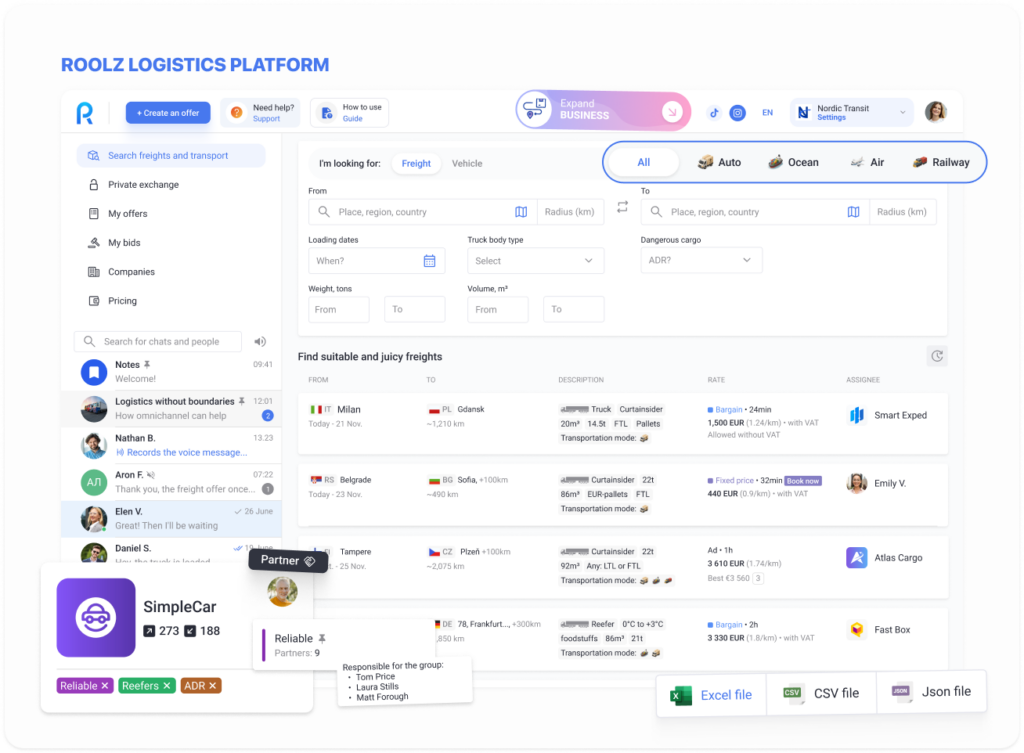
Roolz is not limited to standalone road transport shipments. It supports multimodal shipments within a single offer: one route can combine several transport modes, for example, road delivery to a port, then an ocean or rail and the final road delivery to the consignee’s warehouse. Instead of splitting procurement across different tools, the whole route can be organized in one workspace.
Broad geography and different procurement scenarios
Roolz supports both local and international routes, including the routes across the EU, CIS, China and Asia. The same logic applies across the following scenarios:
- regular route → private pool → recurring bidding;
- one-off shipment → open spot → find current rate;
- non-standard route → open market → expand partner pool;
- multimodal shipment → single offer → several route modes.
Spot Rates vs Contract Rates: What Should You Choose?
The question is no longer strictly one model over the other — each has its own job. The table below compares spot rates vs contract rates by what matters most to a shipper.
| Contract Freight | Spot Freight | |
| Core value | Predictability | Flexibility |
| Planning | High predictability | Depends on the market |
| Relationships | Long-term | One-time or recurring |
| Price | Agreed in advance | Set at the moment of procurement |
| Link to the market | Needs extra benchmarking | Price visible at purchase |
| Best for | Regular volumes, stable routes | Regular, irregular, extra and urgent loads |
In practice these models complement each other. Contracts secure capacity and build long-term relationships. Spot procurement lets you react to market shifts, find extra capacity and check current spot rates. And the private spot market merges the two: you work with familiar carriers while keeping competition alive for each load.
A practical rule: keep contracts for stable, high-volume routes, buy irregular and urgent loads on the spot market and use spot offers to benchmark your contract rates on a regular schedule.
The Market Is Changing — and So Is Procurement
The freight market is becoming more dynamic. Terms that were favorable when the contract was signed will not necessarily stay that way for the duration of the agreement. Therefore, the procurement task is gradually shifting. In the past, finding a reliable carrier and agreeing on a long term contract was enough. Today a company needs to do several things at once:
- secure the capacity it needs;
- work with reliable partners;
- understand the current market price;
- react quickly to volume changes;
- be able to bring in new carriers;
- regularly test whether existing terms still hold up.
That is why the future of transportation procurement is not a full switch from contract to spot. It is the ability to use both models at the same time:
- contract gives predictability;
- spot market gives flexibility and market transparency;
- private spot market combines both within your own pool of trusted partners.
For a shipper, that means a new approach to freight procurement: not just locking in partners and prices for a long period, but keeping a constant visibility of the market and deciding on today’s real conditions.
FAQ
What are spot rates in shipping?
They are the prices for a single, short-term shipment, formed at the moment of demand based on live supply and capacity. Unlike contract rate agreed in advance, a spot rate reflects the current state of the market on a specific route and date.
What is the difference between spot rates and contract rates?
A contract rate is fixed in advance for a defined period and gives predictability. A spot rate is set at the moment of purchase and reflects live market. Most shippers use both: contracts for regular routes, spot market for extra, urgent or irregular loads and for benchmarking.
What is spot market freight?
It is a shipment bought on an open market without a long-term agreement. Carriers respond to a published offer, the shipper compares offers, and the price is set at the moment of purchase rather than fixed months earlier.
What is a freight contract?
A freight contract (or transportation contract) is a longer-term agreement covering agreed cargo volumes, routes, service levels and prices over a defined period. It is the basis of contract logistics and is best suited for regular shipment volumes and stable routes.
What is freight procurement and how does it work?
Freight procurement is the process of sourcing, comparing and distributing transportation to carriers, then managing those relationships. It works by defining a need, collecting offers (through tenders, bidding or spot market), selecting a carrier and reviewing terms regularly.
What is procurement in logistics?
Procurement in logistics is the broader practice of deciding who transports your freight, at what price and on what terms — continuously, not just once. A modern approach combines contract commitments with regular spot benchmarking to keep pricing competitive.
How do spot rates affect freight markets?
They act as a live signal: they rise when capacity tightens and fall when it loosens, usually before contract rates can be renegotiated. Even shippers who have contracts still watch spot rates to see what transportation is really worth today.
How to run mini-bids for spot freight?
Publish a single load or a small batch to your pool of proven carriers, pick a bidding mode, set a short deadline and compare the offers. On a digital freight marketplace such as Roolz, the same offer can also be duplicated to the public exchange to get an extra price reference.